Beyond Image Generation: AI as a Spatial Critic
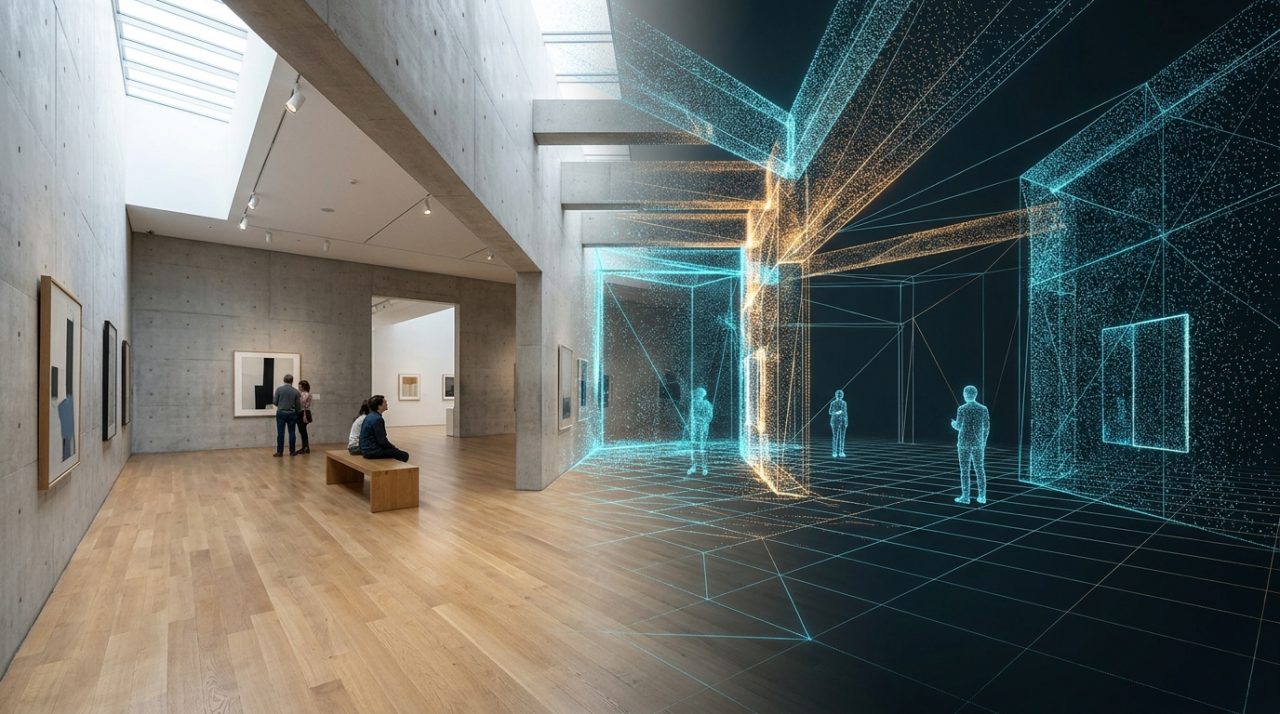
Most early conversations about AI in architecture fixated on text-to-image generators producing glossy concept facades in seconds. In 2026, some of the most substantive work in architectural studios and universities runs in the opposite direction: feeding multi-angle renders and 360-degree VR panoramas into Vision-Language Models (VLMs) to evaluate spatial legibility, perceived warmth, wayfinding clarity, and emotional valence.
What Benchmarks Show—And Where Human Designers Remain Essential
Recent comparative experiments benchmarking VLM evaluations against human participants wearing VR headsets reveal an illuminating split:
- High Alignment on Spatial Fundamentals: Multimodal models reliably identify glare traps, cramped corridor compression, confusing wayfinding dead-ends, and harsh material contrast—making them valuable rapid QA reviewers during schematic design.
- Blind Spots in Cultural Memory & Tactile Nuance: Models still struggle to grasp localized cultural symbolism, subtle acoustic intimacy, and the kinesthetic pleasure of climbing a cantilevered stair toward a sudden waterfront vista.
"Treat spatial AI the way structural engineers treat finite-element stress maps: an invaluable early warning lens, never a substitute for architectural judgment."
Integrating Spatial Diagnostics Into Practice
Forward-looking commercial and exhibition practices now run automated panoramic checks at key schematic milestones—flagging sightline obstructions and daylight imbalance weeks before client VR walkthroughs, leaving human architects more time to refine craft, materiality, and narrative.