Why Physical Materiality Still Matters in an AI Decade
When high-resolution digital catalogs and AI moodboards proliferated, skeptics predicted the demise of in-person architecture and interior design expositions. Instead, platforms rooted in Canada's rich contract heritage—from IIDEXCanada's long legacy at the Metro Toronto Convention Centre to IDS Contract and Toronto's citywide DesignTO festival—discovered a sharper purpose.
Specifiers do not travel across provinces to read PDF spec sheets; they attend to touch acoustic weaves, verify true color rendering under 3000K versus 4000K lighting, test seating ergonomics, and debate building-code shifts face-to-face with peers and manufacturers.
The High-Performing 2026 Exhibition Pavilion
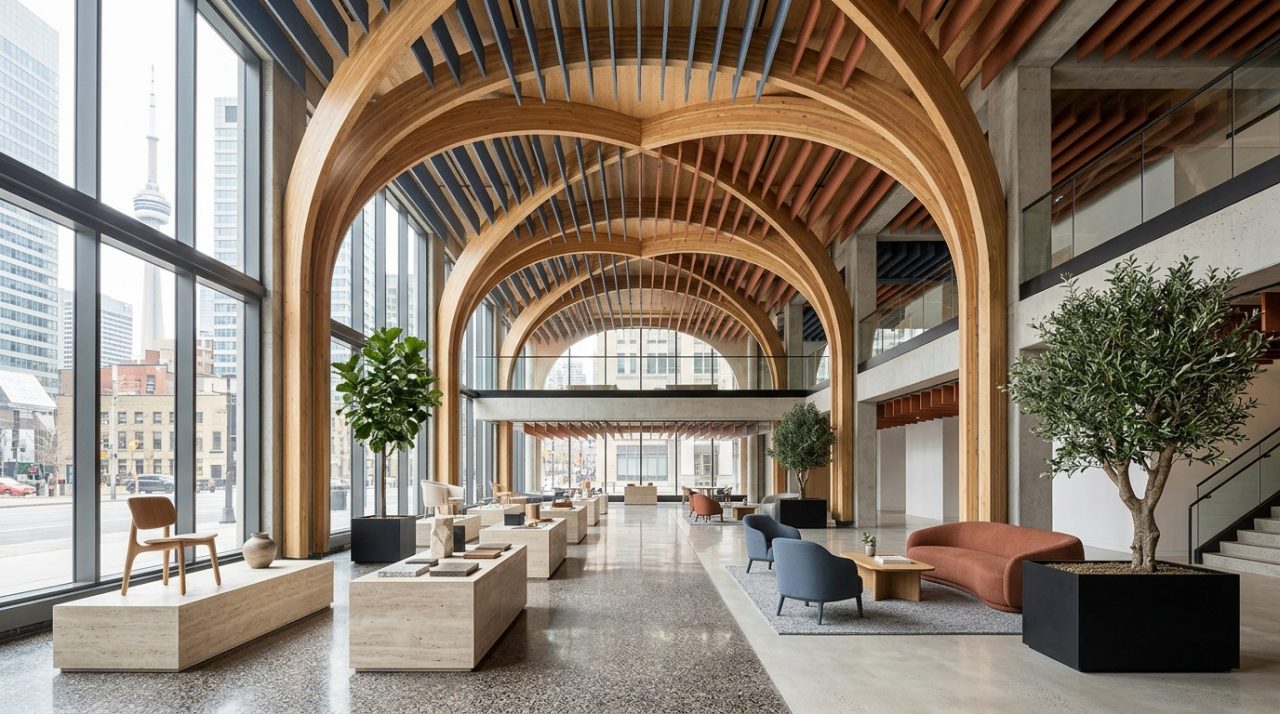
- Curated Material Plinths Over Cluttered Booths: Leading contract brands now present fewer SKUs on gallery-style travertine or modular timber plinths, freeing floor area for substantive specifier conversations.
- Zero-Waste Modular Demountability: Dry-jointed aluminum and timber exhibit frames pack flat into reusable shipping crates, eliminating the single-use drywall waste of legacy trade shows.
- Paired Digital Twin Libraries: QR-linked USD and BIM material assets let designers drop a newly launched Canadian textile or luminaire straight into their studio's live XR scene before leaving the convention hall.